
 evap system test results
I have a verus and am working on a 2002 highlander. I can run the "Evap System Test", but I cannot decipher the results! I don't have a table for the vapor pressures I see during the test. In other words can anyone tell me when I run this test WHAT I should expect to be reading ? I cannot find this information anywhere. The test is about 7 steps and each segment runs a test and gives a result in "mmHg" can anyone tell me what I should be looking for.
-
-
don't worry i'm sure crusty will help you ask snap on why they did it this way soon enough .
.
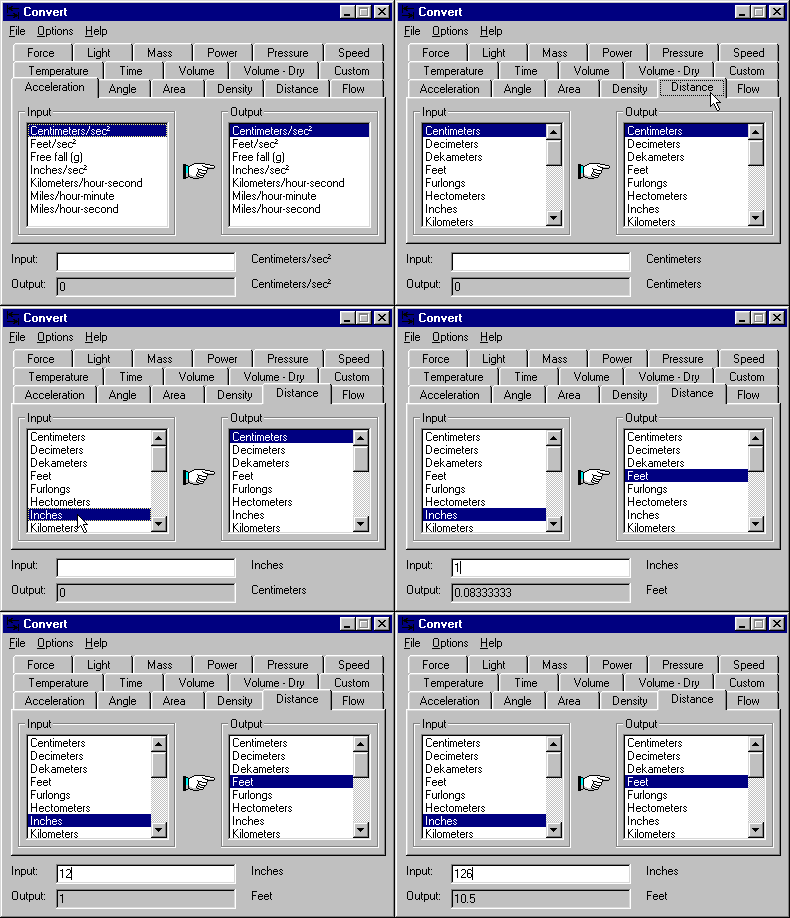
i believe the conversion for this is 1 mmhg = 0.03937008 inhg. for now you may want to download this program.
it's a handy little program for all sorts of conversions. -
I've been standing on my tongue-!!!!!
I'm waiting for SO to display the EVAP vacuum/pressure pid in the same scale as the factory manuals (for OBVIOUS reasons) since 2007-!!!
Try this;

or try this;
-----------
1 millimeter mercury (0°C) =
atmosphere (atm): 0.00131
attopascal: 1.33322368368469E+20
bar: 0.00133
centimeter mercury (0°C): 0.09999
centimeter water (4°C): 1.35954
centipascal: 13332.23683
decipascal: 1333.22368
dekapascal: 13.33223
dyne/square centimeter: 1333.22368
exapascal: 1.33322368368469E-16
femtopascal: 1.33322368368469E+17
foot water (60°F): 0.04464
gigapascal: 1.33322368368469E-07
hectopascal: 1.33322
inch mercury (32°F): 0.03937
inch water (60°F): 0.53577
kilogram/square centimeter: 0.00135
kilogram/square meter: 13.59509
kilogram/square millimeter: 1.3595098057822E-05
kilopascal: 0.13332
kilonewton/square centimeter:1.33322368368469E-05
kilonewton/square meter: 0.13332
kilonewton/square millimeter:1.33322368368469E-07
kip/square inch: 1.93367746969685E-05
megapascal: 0.00013
microbar: 1333.22368
micropascal: 133322368.36846
millibar: 1.33322
millimeter mercury (0°C): 1
millipascal: 133322.36836
nanopascal: 133322368368.469
newton/square centimeter: 0.01333
newton/square meter: 133.32236
newton/square millimeter: 0.00013
pascal: 133.32236
petapascal: 1.33322368368469E-13
picopascal: 133322368368469
pound/square foot: 2.78449
pound/square inch (psi): 0.01933
terapascal: 1.33322368368469E-10
ton/square foot: 0.00139
ton/square inch: 9.66838734848424E-06
torr (mmHg): 1
-------------
If you need to know what the mmHG value is in INCHES OF WATER COLUMN, multiply the mmHG by 0.5353.....
TTFNLast edited by Crusty; 08-09-2011, 01:52 AM.Comment
-
isolating the evap results
thank you to crackerclicker and crusty for responding and giving me the conversions which are helpful. But I am still missing what I am looking for in each phase of this system test when I run it. The test is broken down in 7 events each is designed to isolate and test a part of evap system. It runs the test phase and you watch the vapor pressures. BUT! they don,t say how long to run each segment {you control each step by selecting "continue" to move on to next step} and they don't tell you whether your watching for vapor pressure to increase-drop-remain the same? so as you go depending on how fast you go through these steps your results will vary. This vehicle passes all electrical tests to solenoids, and I've smoked it several times to no avail, it has a new Toyota gas cap , so I figure I can isolate my problem if I can understand how to correctly run this test and read it's results
Comment
-
Hi Paul,
Here are the steps for the KOEO Test:
Phase 1: System at rest. No pressure/vacuum present at FTP Sensor. 0 kPa or something close.
Phase 2: .020" Calibration Test. The pump is being calibrated to check for a .020" leak. It has an orifice inside that it uses to do this. You should see vacuum present at the FTP Sensor. I think it is around -4kPa.
Phase 3: Leak Check. With no leaks, FTP should go beyond -4.5kPa.
Phase 4: Purge Valve Check. With System sealed and vacuum present, the Purge Valve is opened to see if vacuum disappears. 0kPa, or something close.
Phase 5: .020" Leak recheck. Same as above.
Phase 6: System at rest again. Same as above.
Joe"You don't build a reputation on what you're going to do"
Henry FordComment
-
I had a 2002 corolla with po442 and p0440 that was a tough one to figure out, ccv and bypass valve had been replaced along with new fuel cap. I ran the system test like you were doing and the results of the test seemed like everything was functioning normally. This was with 1/2 tank 75-80 degree weather. i Ran the test several times. If you cleared the codes the moniter would run multiple times without setting a code, 4 to 5 weeks seemed to be the magic number. I actually ended up making a resistor setup that took place of the iat and ect to force the moniter to run. you can see how to builld it if you go to motor magazine website there is 8 or 9 articles on toyotaevap that are good. anyways my problem was an internal valve inside the charcoal canister that flipped over. These canisters are apparntly even more sensitive than most to smoke testing which im guessing damaged it. The point of this long story is after i replaced the canister i ran the same test with the verus and the results were just about the same so its very hard to tell if u have this problem but if you have exhausted every other option i would go for a canister-it comes with new hoses psi sensor and bypass valve 260 your cost from dealer probably- good luckComment
-
getting closer
The code this 02 Highlander sets is P0442, Glen, thanks I will go to motorage and review what I can on Toyota evap diagnosis. Joe thanks for the info. on test, But, the test on my verus is a KOER test not KOEO so I'm not sure we are on the same page, and I still need to know am I looking for, increase-decrease- or holding pressure during each phase. I have contacted SnapOn and have been told that instructions for running that test is in the Shop Stream user manual, I have searched it and come up empty handed. All in all I've got more now than when I started. I'm getting the vehicle back on the 15th of this month. If anyone has any otherinformation I'd appreciate it. I will keep all posted, and keep on doing what we always do, keep at it til we get itComment




Comment